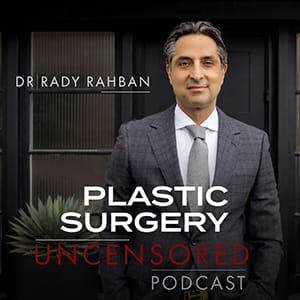
The biggest recent shift in breast implant technology is the 2024 FDA approval of Motiva implants, the first new breast implant design cleared by the agency since 2013. Beverly Hills board-certified plastic surgeon Dr. Rady Rahban weighs the latest silicone, gummy bear, and Motiva options against each patient's anatomy and goals during every breast augmentation. This guide breaks down what's new, how the options compare, and how to choose the right implant for your body.
What Is Breast Augmentation?
Breast augmentation is a surgical procedure that increases breast size and improves shape using implants or, in some cases, fat transfer. According to the American Society of Plastic Surgeons, it remains one of the most commonly requested cosmetic procedures for patients seeking fuller, more proportionate breasts.
Choosing the right implant is one of the most consequential decisions in the process, since it affects how the results look, feel, and hold up over time. A few of the main factors patients weigh include:
- Implant material (saline, standard silicone, or newer options like Motiva)
- Implant shape (round versus teardrop/anatomical)
- Profile and size relative to the patient's chest width and existing tissue
- Incision location and surgical technique
Breast Implant Types Compared: Silicone, Gummy Bear, and Emerging Options
Saline implants use a silicone shell filled with sterile saltwater, while standard silicone implants use medical-grade silicone gel of varying thickness. "Gummy bear" implants are a form-stable silicone gel that holds its teardrop shape even if the shell is cut, a texture Dr. Rahban's page on breast implant types explains in more detail.
The newest entrant to the U.S. market is Motiva, which received FDA premarket approval in September 2024 for both primary and revision breast augmentation in women 22 and older. According to MedTech Dive, Motiva was the first new breast implant to receive U.S. premarket approval since 2013, following a multi-year clinical trial process.
Motiva's Ergonomix design uses a viscoelastic gel that shifts with body position and movement, aiming to mimic the way natural breast tissue behaves when a patient is standing, lying down, or moving. Dr. Rahban evaluates whether this newer option, standard silicone, or saline best fits each patient's anatomy and priorities during the consultation, since no single implant type is the right choice for every patient.
Choosing Your Breast Augmentation Size and Profile
Implant size and profile should be selected based on chest width, existing breast tissue, and the patient's desired outcome, not a single "best" cup size. A larger profile projects further from the chest wall at a given volume, while a lower profile spreads that same volume more broadly.
Dr. Rahban spends significant time during consultations helping patients visualize how different sizes will look on their specific frame, since a size that looks proportionate on one patient may look disproportionate on another. Patients are encouraged to bring reference photos and try implant sizers in-office rather than choosing a size in isolation.
Incision and Placement Options for Natural-Looking Results
Implants can be placed above or below the chest muscle, and incisions are typically made in the inframammary fold, around the areola, or in the armpit. Each placement and incision approach carries different trade-offs for scarring, recovery, and how the implant sits over time.
Dr. Rahban favors techniques that minimize the visibility of scarring and reduce the risk of implant rotation or malposition. For silicone implants specifically, he uses a Keller Funnel to insert the implant through a smaller incision than would otherwise be needed.
Breast Augmentation Candidacy: Are You a Good Fit?
Good candidates for breast augmentation are in good general health, have realistic expectations, and are not currently pregnant or breastfeeding. Age also plays a role in which implant types are available, since the FDA restricts silicone implants, including Motiva, to patients 22 and older for cosmetic augmentation.
Patients considering augmentation should also understand the associated risks before moving forward. Dr. Rahban's breast implant illness page outlines symptoms some patients report with implants, along with options like implant removal for those who experience them.
Recovery Timeline and What to Expect
Most patients take one to two weeks off work after breast augmentation, with strenuous exercise restricted for four to six weeks while the tissue heals around the implant. Swelling and firmness gradually resolve over the following months as the implants settle into their final position.
Breast implants are not designed to last a lifetime. The American Society of Plastic Surgeons notes that implants can remain in good shape for 20 years or more in many patients, though individual results vary based on the implant type, surgical technique, and the patient's body. For silicone implants, the FDA recommends an MRI or ultrasound screening 5-6 years after surgery and every 2-3 years afterward to check for silent rupture.
Frequently Asked Questions
What are the best breast implant options for natural-looking results in 2026? Form-stable "gummy bear" silicone and newer options like Motiva's Ergonomix implant are generally chosen for their natural movement and shape retention, though the best option depends on the patient's chest anatomy and goals. Dr. Rahban evaluates each patient individually rather than defaulting to one implant type.
How long do breast implants last, and will I need them replaced? Breast implants are not lifetime devices. Many patients keep their implants for 20 years or more, but the FDA recommends periodic MRI or ultrasound screening for silicone implants to check for silent rupture over time.
What is the difference between silicone, saline, and Motiva breast implants? Saline implants are filled with sterile saltwater inside a silicone shell, while standard silicone implants use a thicker silicone gel. Motiva is a newer, FDA-approved silicone implant that uses a viscoelastic gel designed to move more naturally with the body.
Is breast augmentation safe, and what are the most common risks? Breast augmentation is a well-established procedure, but potential risks include capsular contracture, implant rupture, changes in nipple sensation, and the eventual need for revision surgery. Choosing a board-certified plastic surgeon and an accredited surgical facility reduces these risks.
What breast augmentation size is right for my body type? The right size depends on chest width, existing breast tissue, and the patient's desired proportions rather than a specific cup size goal. Trying implant sizers during a consultation helps patients visualize realistic outcomes on their own frame.
Can breast augmentation be combined with a breast lift? Yes, patients with sagging in addition to volume loss often benefit from combining augmentation with a lift in a single procedure. Dr. Rahban's breast augmentation with lift page covers when this combination approach makes sense.
Is there a non-surgical alternative to breast augmentation? There is no non-surgical option that permanently increases breast volume the way implants or fat transfer can. Patients interested in an implant-free approach may consider fat transfer breast augmentation instead of a device-based procedure.
Schedule Your Breast Augmentation Consultation
Dr. Rady Rahban stays current on implant technology, including newly FDA-approved options, so patients can make an informed choice rather than settling for a one-size-fits-all recommendation. Schedule a consultation to discuss which implant type fits your goals for breast augmentation.
This information is provided for educational purposes only and does not replace a consultation with a board-certified plastic surgeon. Outcomes, risks, and suitability vary from patient to patient.
Contact Dr. Rahban's Beverly Hills practice to schedule your consultation.
Sources