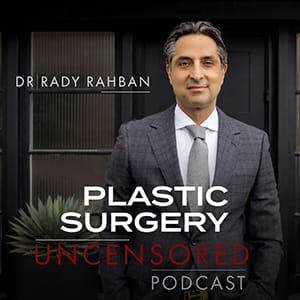
Breast implant illness (BII) refers to a collection of systemic symptoms, including fatigue, brain fog, and joint pain, that some patients report after breast augmentation or reconstruction. It is not yet an officially recognized medical diagnosis, but Dr. Rady Rahban treats it seriously and has spent years studying the condition alongside his patients.
Board-certified by the American Board of Plastic Surgery and a Fellow of the American College of Surgeons, Dr. Rahban is widely known as a master of revision breast surgery, the surgeon patients seek out when a prior augmentation needs correction or removal. He built that reputation on the same philosophy that underpins his podcast, "Plastic Surgery Uncensored": thorough, honest answers rather than a sales pitch.
In this blog, Dr. Rahban draws on his experience performing breast implant removal at his AAAASF-accredited Beverly Hills surgical center to walk you through the symptoms, possible causes, and treatment options for BII.
Breast Implant Illness Basics
Breast implant illness (BII) is a term patients and clinicians use to describe a range of body-wide symptoms that appear after a patient receives breast implants. It is not currently an official diagnosis, and there is no single lab test that confirms it, but the FDA has documented these reports closely enough to take the symptoms seriously; Dr. Rahban does too.
Patients who report BII describe symptoms that affect the whole body rather than just the breasts, most commonly:
- Chronic fatigue
- Brain fog or trouble concentrating
- Joint and muscle pain
- Hair loss
- Hormonal changes
- Skin rashes or photosensitivity
- Sleep difficulties
- Anxiety or depression
According to the FDA's most recent safety review, a few patterns stand out:
- Symptoms have been reported with every type of implant, regardless of filling, shape, or surface texture
- Onset varies widely, from right after surgery to several decades later, with symptoms beginning an average of about five and a half years after implantation
- The exact cause is still under research, but breast implants are not lifetime devices, and the FDA notes that the longer a patient has implants, the greater the chance of complications requiring additional surgery
- Some patients have sensitivities to the metals used in implant manufacturing, and those with autoimmune conditions are generally considered less ideal candidates for augmentation in the first place
Dr. Rahban evaluates each patient's full medical history during consultation to help identify which of these factors may apply to their symptoms.
How Is BII Diagnosed?
There is no blood test, scan, or biopsy that confirms breast implant illness on its own; diagnosis is largely a process of exclusion.
Dr. Rahban reviews a patient's symptom timeline, rules out other medical explanations, and considers whether symptoms began or worsened after implant placement.
Many patients report symptom improvement after implant removal, which is part of why the condition is taken seriously even without a formal diagnostic marker.
BII vs. BIA-ALCL: What Is the Difference?
BII is often confused with breast implant-associated anaplastic large cell lymphoma (BIA-ALCL), but the two are not the same condition. Here are the key differences:
- BIA-ALCL is a cancer, not breast cancer. It develops in the scar tissue capsule that forms around an implant, affecting the immune system rather than breast tissue itself.
- Its symptoms are localized, not body-wide. BIA-ALCL typically presents as swelling, hardness, or tightness around the implant, unlike the systemic symptoms associated with BII.
- The recommended response differs. If BIA-ALCL is suspected, prompt implant removal is the recommended course of action, since early treatment improves outcomes.
What Are the Treatment Options for Breast Implant Illness?
Implant removal, also called explant surgery, is the most common treatment patients pursue for BII.
Dr. Rahban customizes each plan based on a patient's anatomy and goals, which typically fall into one of a few approaches:
- Implant removal alone, for patients whose remaining breast tissue can hold its shape without further reshaping
- En bloc capsulectomy, which removes the surrounding scar capsule along with the implant
- Removal combined with a breast lift, which reshapes the remaining tissue for patients who want a firmer, more lifted result
Every plan comes down to how much natural breast tissue remains and what result the patient wants to see.
Questions About Breast Implant Illness? Dr. Rahban Is Here to Help
Dr. Rahban is a board-certified plastic and reconstructive surgeon certified by the American Board of Plastic Surgery and a Fellow of the American College of Surgeons. He has built a reputation as a go-to surgeon for revision breast surgery, and he performs explant procedures at his AAAASF-accredited surgical center on Lasky Drive in Beverly Hills.
Patients travel from around the world to see him specifically because of his experience untangling complex breast cases, including BII, capsular contracture, and prior surgeries that did not go as planned.
If you suspect your implants may be connected to how you have been feeling, you do not have to figure it out alone. Dr. Rahban offers thorough, honest consultations to help you understand your options. Contact us today to schedule yours.
Disclaimer: This information is provided for educational purposes only and does not replace a consultation with a board-certified plastic surgeon. Outcomes, risks, and suitability vary from patient to patient.